Dedicated to the memory of Sheena Wurthmann (1944-2025)
In the Beginning
It hardly seems credible, but we are now more than a quarter of the way through the twenty first century and at the same time, Eco-Congregation Scotland (ECS) is now twenty five years old.
At a time of discord and difficulty in world events, it is good to pause and reflect on what has happened during these past twenty five years and how ECS has grown to attract so many churches to its mission of caring for creation.
It started in March 2001 when ECS was launched at a service in Dunblane Cathedral, part of an ecumenical environmental movement developed by Churches Together in Britain and Ireland. The first registered eco-congregation in Scotland was Barclay and Viewfield Parish Church in May 2001. With start up support from Keep Scotland Beautiful and the Church of Scotland Society, Religion and Technology project, the early growth of ECS was enabled by talented staff and volunteers including Victoria Beale, Eleanor Todd (now Eleanor Harris) and Margaret Warnock.
Some important features were established early in the story, for example: an awards scheme was set up to recognise the achievement of eco-congregations; local area networks were established; and a website created to offer a range of resources. The awards scheme recognises the great work done by eco-congregations across Scotland and the local area networks encourage cooperation and knowledge sharing across communities. The first ECS award was made to Callander Kirk in 2002 and in the first decade the movement took off. By 2006, 100 churches had registered as eco- congregations.
In 2007 the Church of Scotland appointed a Climate Change Officer, Adrian Shaw, part of whose remit was to support ECS and help congregations respond to the challenge of climate change. The post was created in response to increasing concerns from partner churches and development agencies about the impact of climate change around the world and helped to shape the work of ECS in its formative years.
Becoming a Charity
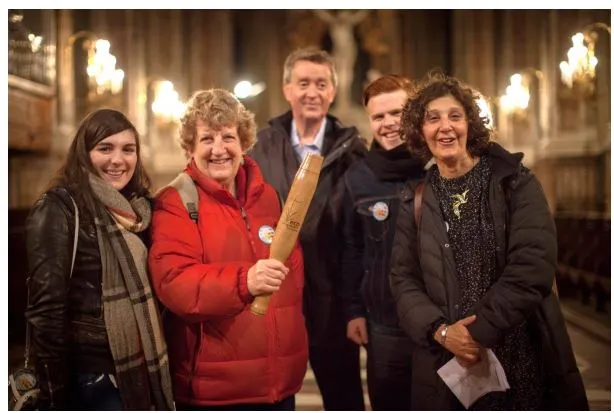
ECS was successful in gaining financial support from the Scottish Government and others, including the Scottish Episcopal Church, Christian Aid and SCIAF. By 2008, 200 congregations were registered. ECS became a charity, registered with OSCR in 2010, with Ewan Aitken as chair and Gordon Hudson appointed as manager. David Bethune and Judith MacLeod were regional coordinators who offered tremendous support to local networks. The new charity also received generous support from the United Reformed Church, who made available a minister on secondment to ECS as Environmental Chaplain. Trevor Jamison was appointed in March 2013, and the role was subsequently taken on by David Coleman in 2018. The Environmental Chaplains have visited eco congregations across Scotland, encouraging and challenging them to reflect, in worship, what it means to care for creation. David’s skills as a video artist have been shared widely, for example his contributions to the Season of Creation – a month long celebration held every September. Climate change has become a subject of growing concern, with ECS encouraging churches to monitor and manage their carbon footprint. In 2015, at the suggestion of Sheena Wurthmann, chair of the ECS board, eco-congregations around Scotland were invited to take part in a relay, carrying a baton around Scotland engraved with the message ‘Time for Climate Justice: Churches in Scotland Demand a Deal in Paris, December 2015’.
The baton was taken to over a hundred communities and then a small delegation, led by Sally Foster Fulton, took the baton to Cop21 in Paris. In Paris they joined church groups from around the world in a ceremony at the basilica of St. Denis to call for climate justice. Eco-congregations have been involved in a range of community activities: encouraging biodiversity in church grounds, installing low carbon heating systems, promoting food, gardening and orchard projects, developing pilgrim routes and engaging in advocacy. Nationally, ECS has been a prominent participant in the Stop Climate Chaos Scotland campaign, lobbying the Scottish Government and Scottish Parliament. Internationally ECS was active, with financial support from the European
Christian Environment Network, in the creation of Okogyulekezet, the Eco Congregation movement in Hungary.
The 2020s
The new decade brought new challenges and concerns, both financial and political. The covid pandemic hampered the ability of churches to promote environmental action, and terrible wars in Ukraine, and in the middle east, have highlighted the world’s dangerous dependence on fossil fuels. Between the covid pandemic and the war in Ukraine came the UN climate conference in Glasgow in November 2021(Cop26). With over 80,000 participants it was by far the largest environmental gathering ever held in Scotland and the city became the centre of attention for political leaders and the worlds media.
Faith groups from around the world came to Glasgow. ECS, in partnership with Interfaith Scotland and others, and still under Covid restrictions, rose to the challenge to welcome and host guests, organise events and listen to the stories of global partners. Pilgrims walked from across Britain and Europe to join a rain soaked march in the city. For many participants it proved an unforgettable experience.
2026: a member led organisation
At a time of division, eco scepticism, and global discord, ECS faces its own challenges. With reduced grant funding and financial support from denominations, the charity now relies on its member congregations and individuals to support the organisation and shape its future. In 2026 eco-congregations across Scotland continue to champion creation care: hosting community events, opening up their green spaces, reducing their energy use, campaigning for climate justice and incorporating creation care into everyday worship. We give thanks for all the volunteers who have championed our movement over the last 25 years.
-Written by Adrian Shaw, Eco-Congregation Scotland Trustee, March 2026 –