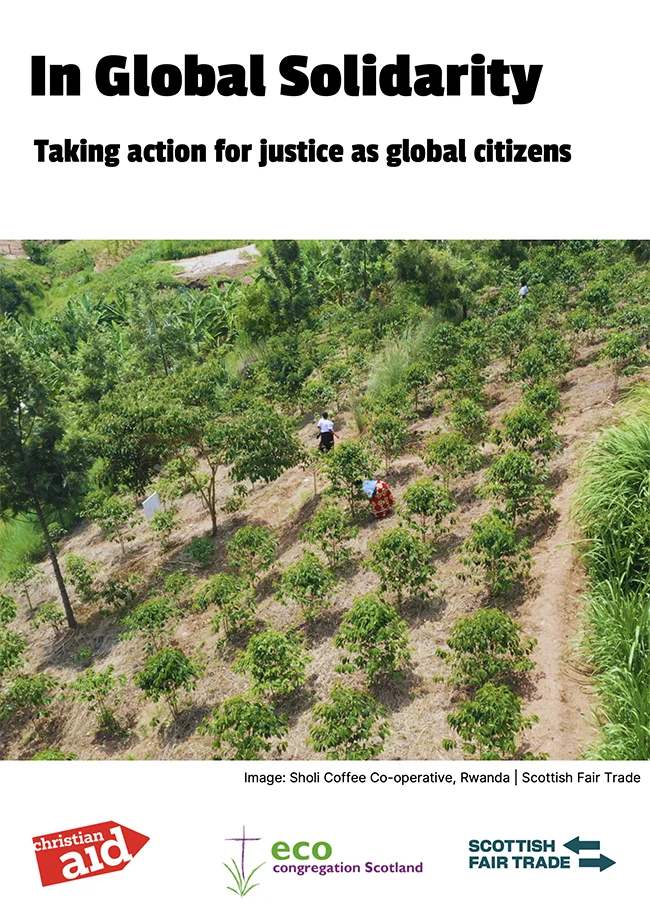
Living in Global Solidarity
Reflecting on what it means to live as global citizens in a time of climate crisis.

Living in Global Solidarity
Reflecting on what it means to live as global citizens in a time of climate crisis.
Caring for creation means recognising that our lives are deeply connected with people and environments across the world. The choices we make in Scotland can affect communities, ecosystems, and economies thousands of miles away. As people of faith, we are called to respond to these global connections with compassion, responsibility, and action. Living in global solidarity invites us to reflect on how our lifestyles, consumption, and advocacy can contribute to a more just and sustainable world for all.
At the heart of global citizenship is the belief that everyone deserves dignity, opportunity, and a healthy environment in which to live. Climate change, environmental degradation, and global inequality are challenges that cross national boundaries and affect the most vulnerable communities first and most severely. By learning about these issues and taking action in our own communities, congregations can play a meaningful role in building a fairer and more sustainable future.
Understanding Global Inequality
Despite progress in many areas, the world remains deeply unequal. Wealth, resources, and opportunities are not shared evenly, and many people still live in poverty or face barriers to accessing clean water, education, and healthcare. Environmental challenges often make these inequalities worse. For example, communities who have contributed least to climate change frequently experience its most severe impacts, including extreme weather, food insecurity, and displacement.
Global citizenship encourages us to understand these realities and reflect on our responsibility within them. By learning about global issues and supporting initiatives that promote fairness and sustainability, congregations can stand alongside communities around the world working towards justice and resilience.
Responding to the Climate Crisis
Climate change is one of the greatest challenges facing humanity today. Rising temperatures, changing weather patterns, and environmental degradation threaten ecosystems, livelihoods, and communities across the globe. For people of faith, caring for creation means recognising the urgent need to respond to these challenges with both practical action and moral leadership.
Church communities can play a powerful role by raising awareness, reducing their environmental impact, and advocating for policies that support a just transition to a low-carbon society. Through prayer, worship, education, and action, congregations can help inspire hope and encourage positive change within their communities and beyond.
Dignity, Partnership, and Action
Global solidarity is not simply about helping others from a distance; it is about recognising our shared humanity and working together as partners. Effective change happens when communities listen to one another, respect local knowledge, and build relationships based on dignity and mutual support.
Congregations can support this approach in many ways, from engaging with fair trade initiatives and supporting international partners to advocating for policies that promote environmental justice. By standing in solidarity with others and taking practical steps within our own communities, we contribute to a wider movement seeking a more just, compassionate, and sustainable world.