Greetings in the name of God the Sustainer, God the Word made flesh, and God the Wild Wind who blows-where-they-will. My name is David – I’m an ordained minister of Word and Sacrament in the United Reformed Church, one of the smaller UK denominations.
You might call me a “protestant”, though we actually avoid that word in our official documents. Christianity as respectful solidarity with the diversity of the friends of Jesus is quite sufficient.
Over the last seven years I’ve visited churches of all shapes and sizes, from the Borders to Shetland, and in every one, I’ve celebrated Pope Francis’ Encyclical letter of 2015, Laudato Si. To the church, and to the world.
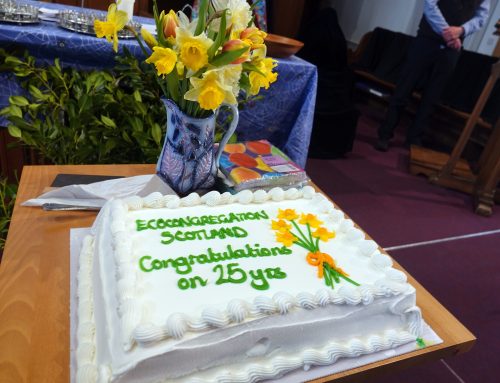
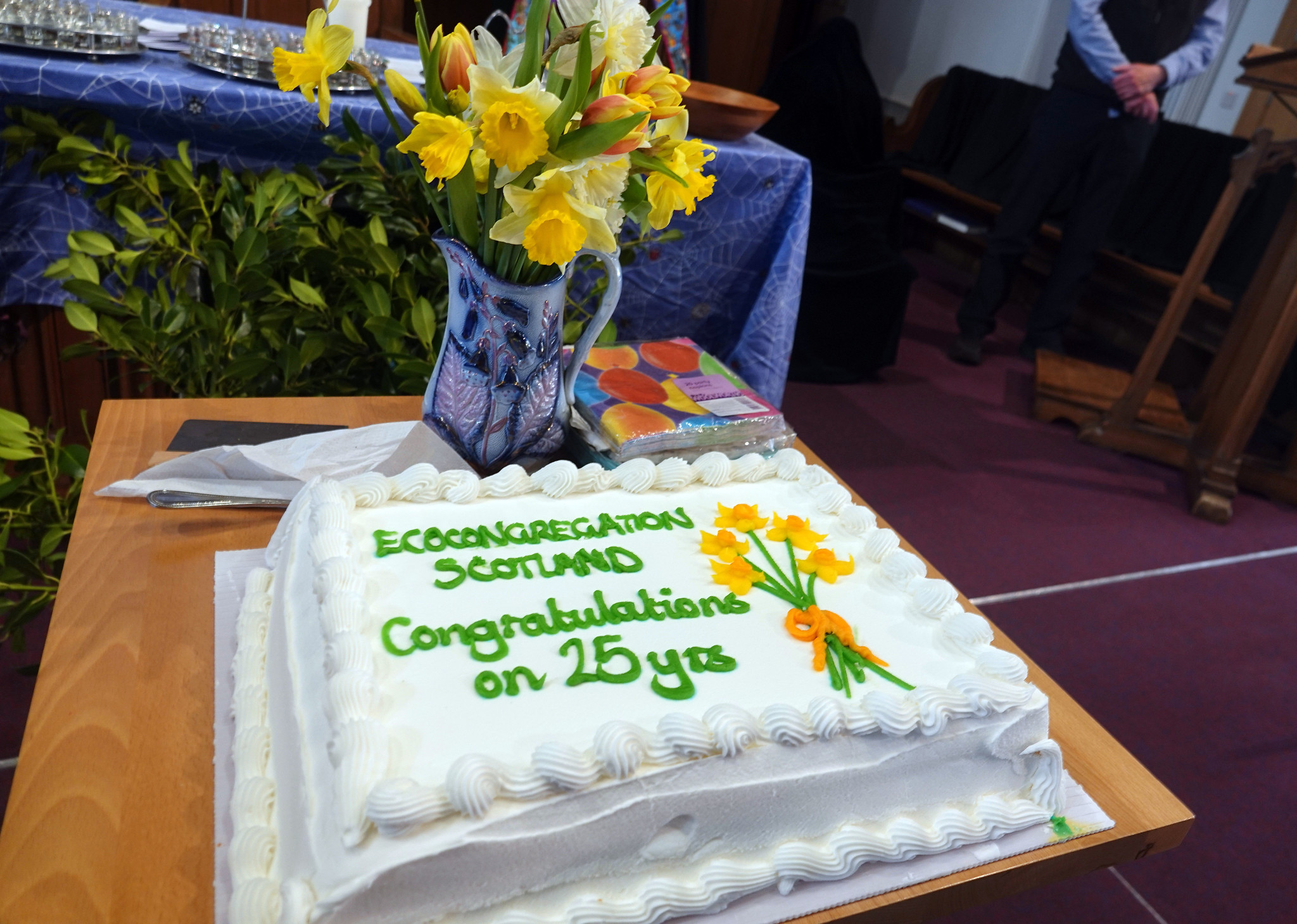
Why? – because I work full-time with EcoCongregation Scotland, the ecumenical grassroots movement of churches committed to care of Creation. Which enriches and deepens our love for God.
The aim is not to convert any church to a particular way, but rather to encourage every tradition to make the most of the particular treasures which sustain and define your identity.
To discover what it means to follow Christ from an awareness of the sickness of the planet, and the causes of that sickness in knowingly chosen human injustice.
Green church,- I’m convinced, because I’ve seen it -green church is more church.
Forty-three catholic churches are among more than six hundred local churches, colleges and communities, from all over Scotland, who have joined in the twenty-four years since our movement started. Some of them can be proud they’ve achieved bronze, silver or gold awards for their combination of practical spiritual and global integration of faith and action – and of course, encouraging their neighbouring churches in similar initiatives.
Prayer and worship expressed as insulation, litter-picks, heat pumps and solar panels. Or maybe it’s all prayer, just “using words when necessary”.
This deepens our faith, and enriches our joy. With eyes wide open to the signs of our times, Christian faith as a resource for times of crisis, now makes more sense than when I was ordained thirty years ago this month. And there’s every encouragement to work more closely together to encourage the care of the common home.
In twenty-four years since the movement began, we’ve seen the rise of a global crisis of nature and climate. Truly, there is no precedent.
It is alarming that some in politics are trying to make capital out of denying this. Lies like that hurt the most vulnerable. It’s vital that churches continue to use their moral authority to support, in love, the truth we need to know to change direction – to embrace what Pope Francis called ‘environmental conversion’. The “transformation of hearts and minds toward greater love of God, each other, and creation.
It is a blessing that worsening climate events have been accompanied by a blossoming of scientific insight that these are not ‘natural’ but caused by human activity.
Caused above all by global injustice surrounding the burning fossil fuels, including in the everyday transport, industry and domestic use of our culture.
Our global north culture, which is only just beginning to transition to other ways of doing things. As all your bishops noted just before the COP conference last year, the urgency of this transition is matched only the requirement that it be justly conducted.
Transition is a must, but transition must be just! I observed first hand the science and the campaigning at COP26 here in Glasgow. COP drew people of faith and goodwill closer together in common prayer and purpose. Archbishop Nolan will remember walking through the November rain with the rest of us, to make these concerns visible.
At every level, from the conversations over the garden fence to the supportive lobbing of our elected representatives, we need to build on that togetherness, not let it slip away. Scotland is not alone in these responses. In the last two years conferences, in St Francis’ hometown of Assisi, have worked towards hard-wiring a day of prayer with Creation into the calendars of all the world’s churches.
Just for the conversation with delegates it was a privilege to attend.
Hearing from a leader of churches in the Middle East how “when the climate crisis is deep, the blessing within the church is abundant.” And Cardinal Fernandez affirming that Jesus … was in constant contact with nature, filled with affection and awe.“
I have met and spoken with sisters and brothers in faith who have already experienced the destruction of their homelands as sea levels rise; and other catastrophes in climate and nature. The gatherings around COP26 in Glasgow were such a great gift of knowledge and friendship. Not just in the Season of Creation, but throughout the Christian year. For speaking the truth in love, which sets us free to act and to change.
Over these seven years, I’ve spoken with colleges training priests and pastors who will be called to lead God’s people in the building of hope and resilience during the entirety of their pastoral and liturgical ministries. Your encouragement and support will be vital to their rising to this challenge. It’s in a renewed consideration of our scripture, tradition and liturgy that we find Good-News resources to enable us to face and respond to the very bad news, which we know will be with us for some generations.
As with other forms of prayer, by the grace of God: every small initiative is valuable.
But every neglect and denial does harm.
Pope Leo’s message at the beginning of this Season of Creation has also been very useful in my work, preparing resources for the Season and offering homilies and sermons in churches. The message recognised the causal linkage we can see in the major prophets of the Old Testament between knowing, chosen injustice, and environmental harm. Pope Francis and other major religious leaders have already asserted that to eradicate nature is sin, no ifs no buts.
And for the church this century, care for creation is the cake, not the icing!