Fife Network
The latest news from our Fife Network.
ECS Season Guide 2025
This year’s Season of Creation/Creation Time/Creationtide resources, written and curated by EcoChaplain Rev David Coleman combine attention to the global Season theme of ‘Peace with Creation’ and a celebration of David’s 30 years in ordained Christian ministry, seven of which have been as EcoChaplain.
As Chaplain, David receives far more invitations to be present for Creation Time/Season of Creation than can be fulfilled: the videos are one way of reaching more congregations with something really unique and special.
IMPORTANT NOTES: we are working towards updating our website: please note that for now, initial loading may be slow. Put the kettle on: it’s worth a few more seconds wait to access what’s there.
FREE USE material is offered free for devotional use. We gratefully acknowledge the support of the George MacLeod Trust in preparing this project this year. We do love to hear how you use it. chaplain@ecocongregationscotland for feedback. Please do continue support us as a charity in any way you can. It makes a difference!
Enormous thanks to our diverse contributors to these resources.
For each of the 5 weeks
[Sep 7, 14, 21,28 and October 5th]…
Under “LECTIONARY NOTES, PRAYERS, VIDEO”
-there are notes on every single lectionary passage, with prayers which can be used and adapted for local use.
“Five sermons for the Season” are the scripts for the full-scale, location VIDEO REFLECTIONS [all under 15 mins] which some churches may choose to use in the sermon-slot, whilst others may prefer viewing it in a ‘study-group’ situation. NB: Study questions are also in preparation
SHORT VERSIONS – under two and a half minutes, are also provided, whether for use as a ‘taster’ or to fill a gap in worship.
Under“OTHER VISUAL
” there’s a link to our popular ‘STILLING VIDEO “ catalogue with a variety of 2-minute items, mostly in natural settings, with slow action, and without words. There’s also a selection of video location readings- interpretations of the lectionary texts in various places, including Assisi, and larger European cities. The “Meme Collection” is an online collection of about 130 freely shareable quotes and pictures, and there’s a photo album too, but please consider the added value of sharing your own local photos and videos, which people can identify with.
We’re delighted to include original creative and reflective writing in the column labelled
“LITURGY, PRAYERS, POETRY”,
original poems mostly presented as text and stylised video, with the writers’ own voices as soundtrack, as well as throughful writing on theology with a bearing on how we present and receive the green commitment which arises from our faith.
Under“GLOBAL CREATION LINKS”
we celebrate our involvement in global churches’ commitment to care for Creation, with other movements and personal connections with friends around the world. The perspectives of the Global South, in particular, are a vital enrichment to our outlook.
Under“ARCHIVE”
we keep visible links to previous year’s ‘Season’ material, and to that from other seasons of the Christian year.
Pentecost: The Spirit Poured Out On All Flesh
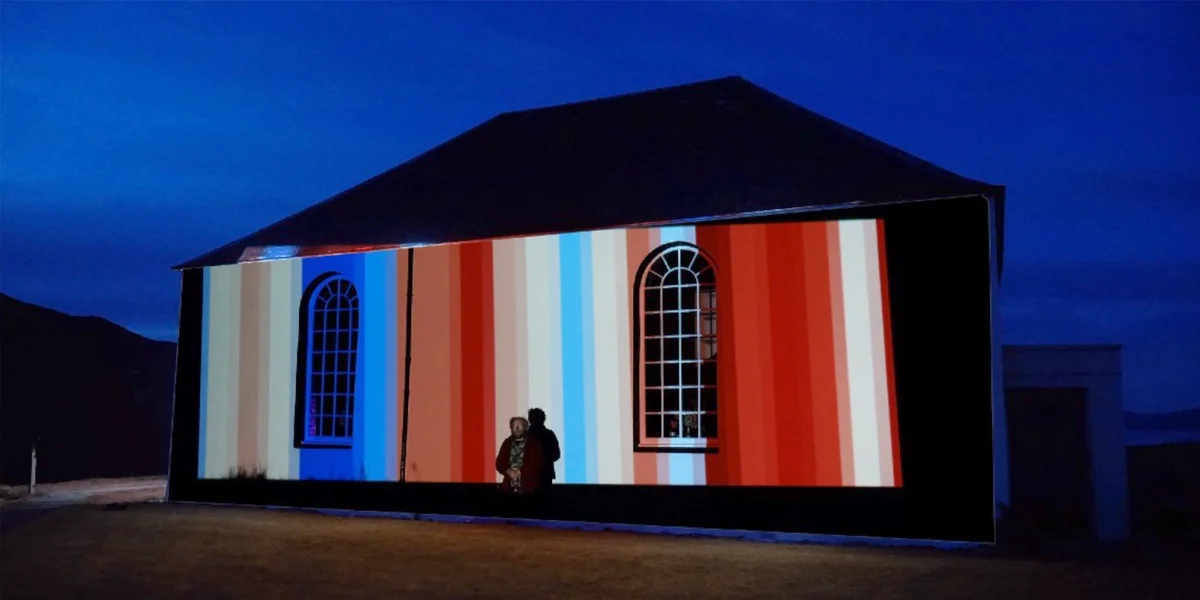
Pentecost Sunday on Colonsay
(a denominationally diverse island parish)
Acts 2:1-21
When the day of Pentecost had come, the disciples were all together in one place. And suddenly from heaven there came a sound like the rush of a violent wind, and it filled the entire house where they were sitting. Divided tongues, as of fire, appeared among them, and a tongue rested on each of them. All of them were filled with the Holy Spirit and began to speak in other languages, as the Spirit gave them ability.
Now there were devout Jews from every nation under heaven living in Jerusalem. And at this sound the crowd gathered and was bewildered, because each one heard them speaking in the native language of each. Amazed and astonished, they asked, “Are not all these who are speaking Galileans? And how is it that we hear, each of us, in our own native language? Parthians, Medes, Elamites, and residents of Mesopotamia, Judea and Cappadocia, Pontus and Asia, Phrygia and Pamphylia, Egypt and the parts of Libya belonging to Cyrene, and visitors from Rome, both Jews and proselytes, Cretans and Arabs– in our own languages we hear them speaking about God’s deeds of power.” All were amazed and perplexed, saying to one another, “What does this mean?” But others sneered and said, “They are filled with new wine.”
But Peter, standing with the eleven, raised his voice and addressed them, “Men of Judea and all who live in Jerusalem, let this be known to you, and listen to what I say. Indeed, these are not drunk, as you suppose, for it is only nine o’clock in the morning. No, this is what was spoken through the prophet Joel:
`In the last days it will be, God declares,
that I will pour out my Spirit upon all flesh,
and your sons and your daughters shall prophesy,
and your young men shall see visions,
and your old men shall dream dreams.
Even upon my slaves, both men and women,
in those days I will pour out my Spirit;
and they shall prophesy.
And I will show portents in the heaven above
and signs on the earth below,
blood, and fire, and smoky mist.
The sun shall be turned to darkness
and the moon to blood,
before the coming of the Lord’s great and glorious day.
Then everyone who calls on the name of the Lord shall be saved.'”
Quite a few of you have learned at least something of a language additional to one you started out with. We sometimes call these ‘foreign languages’ – the tongues of aliens, though the more you get a feel for it, the less alien a language is. And a language is visceral. The shape of your mouth and the muscles of your throat are incarnately involved.
Some of you may enjoy that great gift of being bilingual. Giving you an overview of the way-more- than-rainbow of expression in any one language too. Idioms accents, dialects.
Have a look at the online parallel Bible hub – thirty or so versions of thirty-one thousand verses, even in English.
This diversity in unity of the Bible reminds us that our interpretation of scripture in every place and time is an active adventure, rather than just being passive consumers.
Sometimes you have to risk being thought drunk, even if you’re sober. Or a treehugger, when you’re a serious student of scripture. Today we need to be both.
Because as it says in the introduction to King James: even an ‘Authorised’ Bible must not aspire to be a finally definitive translation for all places and times. With increasing frequency, the twentieth century idiom of the world-before-climate crisis isn’t helping us as it might on this planet now. It inhibits us from the opening of our minds to understand scripture for today. Because it narrows the Spirit-scope!
I don’t doubt that every scholar involved in every single Bible version brings professional conscientiousness into play. But it still remains for you, in a local church, to discern through what sort of slant bias or accent is the Spirit is speaking to the church today.
Foreign or familiar? I think we need both. One of the delights of this “preaching-station” of Colonsay is that you’re always aware that Christ’s
Church, with a big C is culturally and theologically diverse.
So long as you’re awake, You never don’t discern. And that’s a blessing. Because that diversity is depth and enrichment. As in the motto of the Edinburgh Zoological Society: Biodiversity is the wisdom of God.
Some churches today will enjoy the story of the Tower of Babel [Gen 11] – and I’ve heard it suggested that God acts less than worthily in
frustrating the noble – or perhaps domineering?- human unity of purpose when God peevishly frustrates their monocultural unity, and everything that relied upon it fall apart.
But maybe that suggestion is part of the fanatical human centredness of the twentieth century which has bullied us out of a more truly Pentecostal relationship with Creation.
Instead, read Babel as the story of ‘ Make Babel Great Again’ – of monolithic power irresponsibly exercised. Then not only the wisdom, but also the love of “God the Tower Vandal’, becomes rapidly apparent. God, who, for the health of the Earth as a whole, insists on diversity.
The gift of languages to speak is forlorn without the gift of languages to hear, the gifts of minds and hearts to ponder and act. And “Mission” is Good News from God for all Creation, not browbeating your neighbour about Jesus without giving them the chance to teach you too.
As in that phrase from the Book of Job -“Speak to the Earth and Earth will teach you! “
And I wonder what St Francis did learn from those birds to whom he preached? Quite a bit, I think, goingby his 800 year legacy of praise of God alongside fellow creatures. That spirituality of personal solidarity with “our Sister Mother Earth, rather than just exploiting her, stewarding her as a means to an end. Even to a good end. The gift of language is the gift of relationship. With give and take. I have a degree in German – what do we have here in the church? or online.
You might know: When you’re immersed in a different language, funny things happen. You get to the end of a sentence in one language and find the word lurking there in the other. Or you dream dreams in the other languages. And you know that you do need to be a poet in one language to translate a poem from another.
You can’t translate unless you interpret. Which is what Christians have relied on with their scriptures for countless centuries.
In the natural sciences there’s now a growing appreciation of the languages of whatever creatures, which are part of how the Earth lives. Pentecost takes this further. In the last days, the Spirit is poured out upon them.
And we find the word of God in this, that you and I depend on the dance of a pollinating bee when they come back to the hive with the location of nectar. Jesus said to look at the fig tree and all the trees. And you and I, knowing this, can also bless both the black bees of this island. And all the bees.
General, in order to be specific.Specific in order to be general.
The trouble is, when faith loses confidence, we wait on permission from science, to believe what may have been obvious to poets for millennia. And prophets too.
Like Joel, recycled in the New Testament with the recognition that whenever we experience what fits the bill as ‘the last days’ then we should hearken to God’s voice not only the dreams of the disregarded elderly, and the visions of trafficked young women, but in all those signs of the times attendant on the pouring of God’s spirit over all flesh. Over what God chose incarnation into. The Word made flesh. Particular flesh to ‘save’ “all flesh”.
All flesh.
That phrase which, allowing for translation, defines God’s Rainbow Covenant of Genesis 9, so abundantly contextualised that it takes an exceptional pig- headedness to present it as applying only to our species. But some do.
I don’t know how much more we could ask for to recognise this present day and age as ticking the boxes for a serious iteration of End-times. Last Days. No longer is this the ludicrous lunacy of a street-preacher. No longer the plaything of ivory tower theology.
Extinctions at a thousand times their natural rate. A million species seriously endangered. Sensible respectable scientists at the World Meteorological Organisation raise the prospect of 1.9 degrees of warming and ice-free days in the Arctic by 2030. Sea levels face unstoppable centuries of rise.
Let alone the callous thoughtlessness which casts all that crap into the sea that washes up and that you tidy up from your island beaches.
This, then, our day, -whether or not it has happened before or might happen again – this is a time to take advantage of what we do hear from the old, the young, the poor, the despised, and indeed, not only from indigenous humans with their deep-wisdom relatedness to fellow creatures. A time to respect the prophetic voices of Creation-self. That wisdom of Solomon who spoke of trees, animals, birds, creeping things and fish.
To take advantage of the historic holy wisdom of the interaction of saints with animals, trees and birds. That serious authentication of God at work in the lives of Columba, Mungo, Bridget and all the rest.
Today we do, in climate and other sciences, have some amazing interpreters of the voices of the Earth and all their creatures. The flesh on whom, in days which look like last days, the Spirit is poured out.
Telling us how trees – as well as clapping their hands in praise in the Bible – trees talk, argue, look after each other. After their fashion, not after ours.
I think I can generalise with some confidence: the Bible is less hung up about including personalities and voices of Creation than respectable grown-ups have felt permitted to be over the last couple of centuries.
To take note of these voices in a personal way is not to insult them by pretending they’re more like us than they are, but to give their God-given prophetic message a chance to be heard, be tested, and be acted upon.
Global North culture dazzles out of existence our human faculties to see stars, find water, and trace a path across a wilderness without a mobile phone. So we struggle to value the treasures we have been given, alongside the treasures of other life around us.
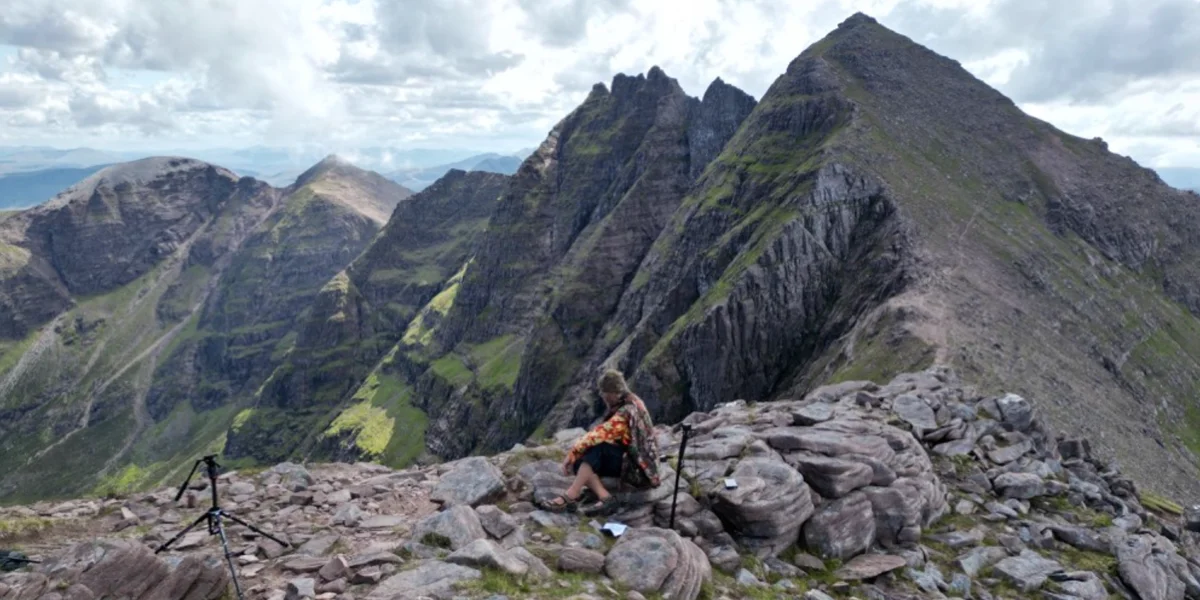
Earlier in the year, inspired by God’s question to Abraham: – can you count the stars? – I began to appreciate a little more the languages of the personalities of Creation, looking at the darkest sky I could find. Seven years into this job, the surprises and the rewards haven’t dried up.
Nor the challenges to languages and ways of thinking which come bundled with an entitlement they believe is proper to definitiveness.
The miracle of Pentecost is that God’s message does not presume or require to dictate the medium. The Gospel is valid in Gaelic, in Welsh, in Phrygia and Pamphylia. In Glasgow and Colonsay. In the scent trails of ants, the buzz of the black bees, the cacophony of the birds at Pig’s Paradise.
And the Gospel, in our day, has a high component of warning. If, as George Macleod put it, “God is in nature”, then God is screaming. How do we discern what God is screaming?
With eyes and ears wide open? So that we do respond. In prayer, in action. In change of heart and mind. The global tragedy is that this year we have more illustration than ever we might wish of the environmental and spiritual evil caused by monolithic domination; harm caused by the suppression of difference, rather than the blessing of dialogue. Dialogue which goes beyond the genteel naiveté that both sides will always be right.
Because beyond 1.5 degrees, it’s dishonest to say ‘everything’s going to be all right’.
It’s way past time we started looking more intelligently at God’s command to humanity in Genesis 1 as to “fill” and to “govern” the Earth.
Even to the extent that humanity’s noble calling might be described as ‘rule’ the only God-blessed government is one for which justice is paramount.
And the myriad habitats which humanity shares with those creatures to whom the land has also been given as a home require adaptation for survival. To fill the Earth, then, is not to dominate, but to adapt. Perhaps to shepherd. Fill the gaps, not bulldoze the hills.
I’ve heard churches present Pentecost as the healing of supposed ‘damage’ done at Babel, but it’s not putting anything back the way it was. There have been attempts to reverse engineer the Greek of the Gospels into an Aramaic which Jesus and his friends may have spoken by choice, but God does not restore. God recycles, repurposes.
For which you need the energy of the Wild Wind, the Spirit, falling like flames on the treehuggers, beach cleaners, the churches, the people of faith, and the animals, birds, fish and other creatures who, by God’s spirit, are our teachers. Now and in days to come.
AMEN